

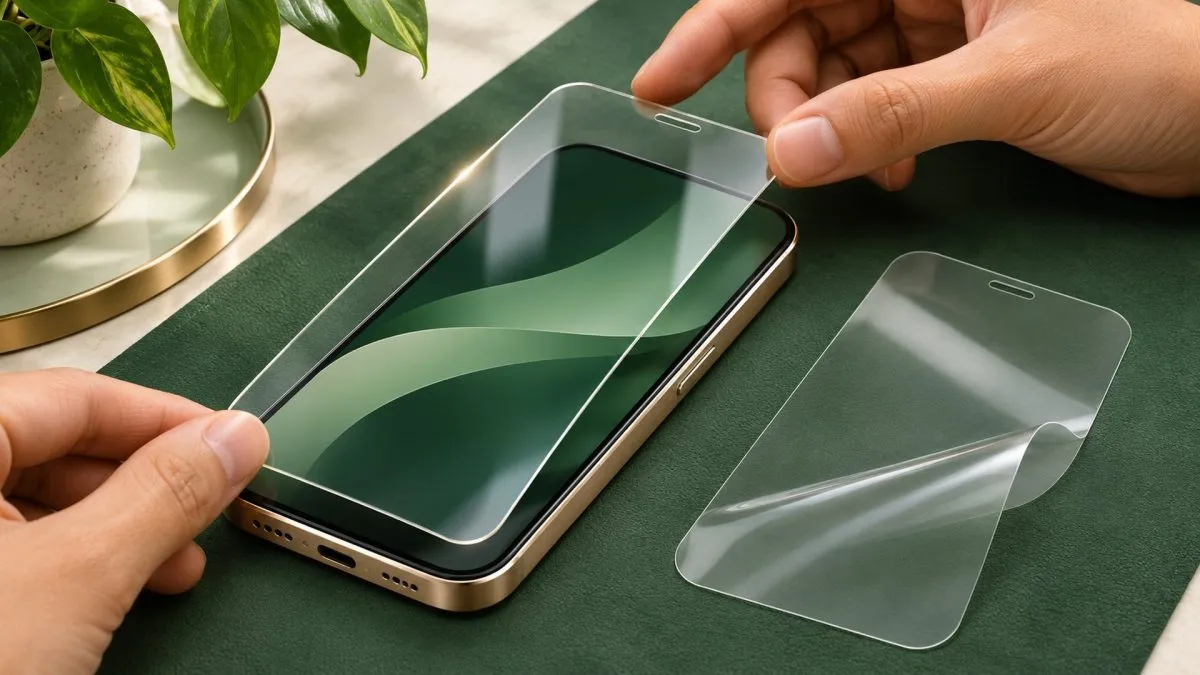
A screen replacement on a mid-range phone in India can easily cost several thousand rupees; on a flagship it can be far more. A protector and case cost a fraction of that. But not all protection is equal, and some popular options do more for the shop's margin than for your phone.
Does Gorilla Glass mean you don't need a protector?
Modern cover glass like Gorilla Glass or Dragontrail is good at surviving drops, but it still scratches — especially from sand and grit, which are everywhere in Indian cities and contain minerals harder than glass. Fine scratches add up and become visible over a year or two. A protector is cheap insurance against scratches, and a good one can absorb some impact too.
The three main options
Tempered glass
- Best for: flat screens and anyone who wants maximum drop protection.
- Pros: feels like the original screen, very scratch-resistant, sacrificial — it often cracks instead of your display.
- Cons: adds thickness; on curved screens it often lifts at the edges or creates a rainbow halo.
- Ignore labels like "9D", "11D" or "21D" — they're marketing, not a standard. Look for full adhesive, an oleophobic (anti-fingerprint) coating and proper cut-outs for the sensors.
Hydrogel / TPU film
- Best for: curved-edge phones.
- Pros: thin, flexible, wraps around curves, minor scratches "self-heal".
- Cons: little drop protection, can feel slightly rubbery, wears out faster.
Matte / anti-glare and privacy films
- Matte reduces reflections and fingerprints but makes the display slightly grainy.
- Privacy protectors darken the screen from side angles — useful in metros and buses — but noticeably dim the display and can interfere with some under-display fingerprint sensors.
Watch out for fingerprint sensors
Phones with ultrasonic in-display fingerprint sensors (some Samsung flagships, for example) often work poorly with thick or poorly made glass. Buy protectors that specifically list compatibility with your model, and re-register your fingerprint after fitting.
Cases matter more for drops
Most screens crack when a phone lands on a corner. That's why a case often matters more than the protector:
- Raised lip around the screen and camera so they don't touch the ground when the phone lands face down.
- Reinforced corners (air-cushion designs).
- Clear cases look nice but cheap ones yellow within months.
- Avoid thick metal cases that can weaken signal.
Installation tips
- Install in a bathroom after running a hot shower for a minute — the steam settles dust.
- Clean the screen with the alcohol wipe, then the dust sticker, before peeling the backing.
- Many shops in India apply protectors for free or a small fee. For curved hydrogel films, it's worth letting them do it.
Our recommendation
- Flat-screen phone: good tempered glass + case with a raised lip.
- Curved-screen phone: hydrogel film + case, or a brand-recommended glass made for that model.
- Careful user who loves the bare feel: skip the protector but use a slim case, and accept some scratches over time.
Frequently asked questions
Do I need a screen protector with Gorilla Glass?
It is still worth having. Cover glass survives drops well but still scratches from sand and grit.
Which is better: tempered glass or hydrogel?
Tempered glass for flat screens and drop protection; hydrogel film for curved-edge screens.
Do screen protectors affect fingerprint sensors?
Thick or poorly made glass can stop ultrasonic in-display sensors from working well. Buy one listed as compatible and re-register your fingerprint.
What protects a phone screen better: a case or a protector?
For drops, a case with a raised lip and reinforced corners matters more, since most screens crack when the phone lands on a corner.
Also read: Phone Battery Myths vs Facts: What Actually Damages Your Battery · Best Phones Under ₹30,000 in India (November 2026): Massive Batteries, IP69 and 144Hz AMOLED


