

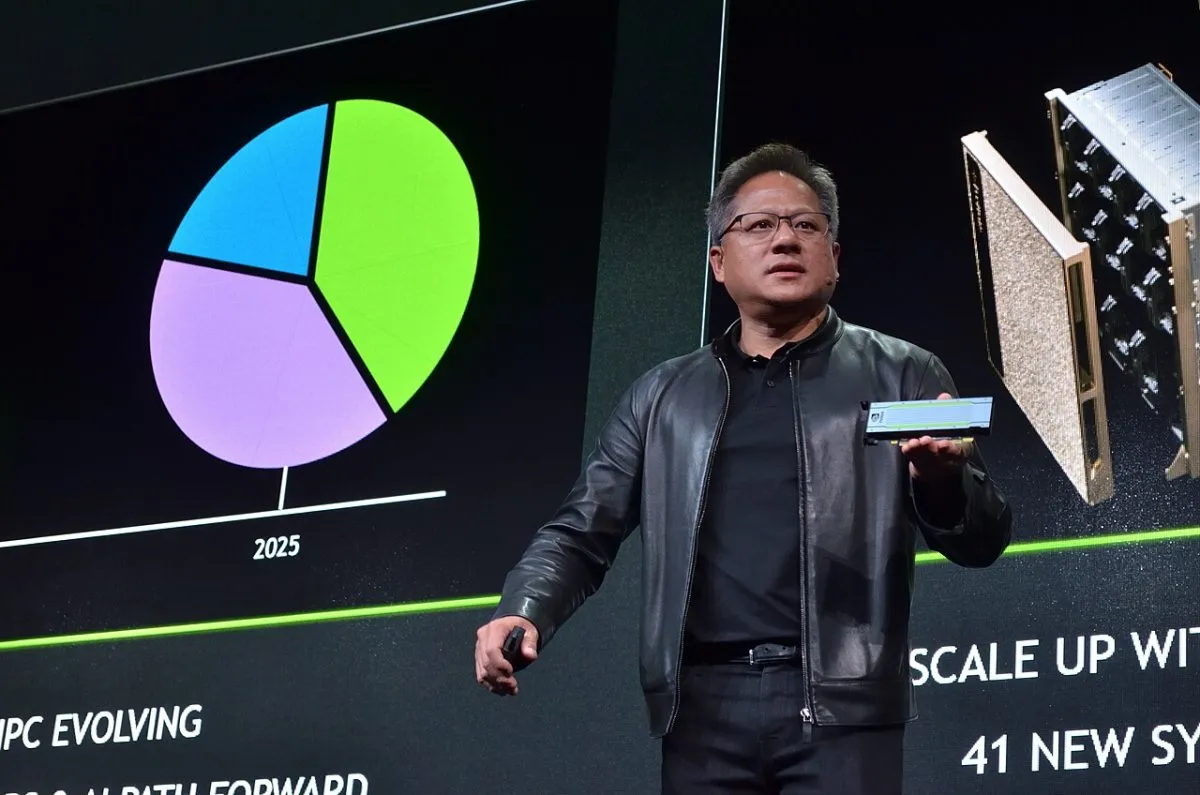
Jensen Huang is back at Nvidia. The company announced on 23 November 2026 that its board had reinstated the co-founder as president, chief executive officer and a director, effective immediately. For readers catching up in India on 24 November, this is a confirmed leadership change with consequences across the artificial intelligence industry. Nvidia's official announcement establishes the appointments.
The announcement follows an exceptionally unsettled period for the company and its investors. Huang's return gives Nvidia a permanent leader again, while putting a familiar executive back in charge of its product strategy and relationships. It also raises a larger question: how does a business restore confidence in its leadership while ensuring that oversight remains effective?
Reuters reported that Huang resigned earlier in November following disclosures of extramarital affairs, including one with an alleged Chinese spy. The reported espionage allegation should be distinguished from an established finding. Nvidia says its independent investigation will continue despite the reinstatement.
What Nvidia has formally confirmed
The board said its reinstatement vote was unanimous. Colette Kress, who served as interim chief executive, continues as executive vice president and chief financial officer. Harvey Jones remains board chair. Those details matter because the announcement changes the chief executive and board membership without combining the chair and CEO jobs. These are the roles described in the company's release.
There is also a small but useful date distinction. The accompanying Form 8-K records the board's action on 22 November, while the public press release is dated 23 November. Reporting the public announcement as Monday's news is therefore consistent with the filing; the two dates describe different parts of the process.
Why the comeback matters beyond the executive suite
A chief executive influences which products receive investment, which customers receive senior attention, and how an organisation communicates through uncertainty. At a technology supplier, those decisions can affect plans that stretch well beyond one quarter. Customers building expensive infrastructure need confidence that the supplier's leadership can make decisions and explain priorities consistently.
This does not mean a company's engineering knowledge resides inside one person. Product teams, researchers, operations specialists and commercial staff all contribute to delivery. The practical question is how effectively the leader coordinates that work. A leadership change becomes particularly significant when external partners are waiting for decisions that connect hardware availability, software support and investment commitments.
Reuters' reporting on the market response describes investors treating Huang's reinstatement as the removal of a major uncertainty around the AI sector. That is a report of investor interpretation. It is not evidence that every commercial or regulatory challenge has disappeared.
The market response was immediate
Nvidia shares finished the 23 November regular US session at $165.05, up 31.48%, according to the dated Yahoo Finance quote. This was the completed Monday session, rather than a claim about a completed Tuesday session. Indian readers see the news on the next calendar day because of the time difference.
A move of that size tells us that investors rapidly changed the price they were willing to pay. It does not tell us that Nvidia sold more processors during the announcement, received an equivalent amount of cash, or immediately increased quarterly profit. Share prices reflect expectations about the future as well as present conditions, so an announcement can move valuation before operating results change.
The distinction helps explain why both enthusiasm and unanswered questions can coexist. Investors can welcome restored leadership continuity while still examining the evidence behind future earnings. Treating those two judgments separately produces a clearer reading of the comeback than assuming that a rising price settles every argument.
Why Nvidia's software ecosystem belongs in the story
Understanding Nvidia requires looking beyond a single chip. The company's CUDA documentation describes a platform and programming model for using GPUs in parallel computing. That software layer helps explain why a hardware supplier's decisions can matter to developers and organisations planning accelerated computing projects.
Consider an organisation choosing equipment for a research project. It must assess whether its software runs correctly, whether its team can maintain the system, and whether the expected workload justifies the expense. A fast processor is only one part of that decision. Software compatibility, support and a clear upgrade path can carry substantial practical value.
Our analysis is that leadership continuity can make these planning conversations easier. However, the announcement itself provides no new benchmark for software performance and no new guarantee about a customer's implementation. Those outcomes require technical evidence and actual execution, independently of a CEO's popularity.
What employees and customers need next
Inside the organisation, the immediate task is translating the announcement into clear responsibilities. Teams need to know who approves budgets, how product priorities are resolved, and where sensitive decisions should be escalated. A highly visible return can create excitement, but clear processes determine whether that energy leads to consistent work.
For customers, useful evidence will arrive through ordinary commercial milestones: deliveries, support commitments, implementation progress and documented product availability. A customer planning a large deployment has different needs from an investor trading the headline. The customer must make the equipment work within a budget and an operating environment.
Nothing in the reinstatement announcement should be read as a new consumer graphics-card launch, a change to Indian retail prices, or a promise of faster delivery for a particular order. Those would require separate announcements or retailer confirmation. Keeping the leadership story separate from product availability prevents an important corporate event from becoming a source of unrelated buying assumptions.
The central management question: confidence and accountability
The comeback also creates an opportunity to examine organisational resilience. If confidence changes dramatically with one executive's presence, a board has reason to consider how responsibilities and institutional knowledge are distributed. That is an analytical question about continuity, rather than a claim that Nvidia has failed any particular legal test.
A resilient structure allows experienced leaders to contribute while making decisions reviewable. It makes room for disagreement, records sensitive choices and supports succession planning. These practices are useful even at successful businesses because the need for continuity exists whether a departure is planned, unexpected or temporary.
For readers following the next stage, three developments will be especially informative: substantive company disclosures, evidence that customers continue executing their plans, and clarity about the respective responsibilities of management and directors. A second day of share-price gains would add another market observation, but would not substitute for any of those operating or governance developments.
How to follow the story from India
Start with the date on each source. An American report filed late on 23 November may arrive in an Indian morning feed on 24 November. Then distinguish the company's statement from an analyst's interpretation and a live share-price update. Each provides useful information, but each answers a different question.
The confirmed development today is that Huang has resumed Nvidia's top executive role and its board has publicly backed that decision. The work that follows is more demanding than an announcement: coordinating products, supporting customers, communicating consistently and demonstrating that the company can combine leadership confidence with durable oversight.
Jensen Huang at SC18 on 12 November 2018. Archival photograph. Photo: Raysonho / Open Grid Scheduler / Scalable Grid Engine / Wikimedia Commons. CC0 1.0. Commons-generated 1280-pixel proportional resize; no local edits, crop or overlays.


