

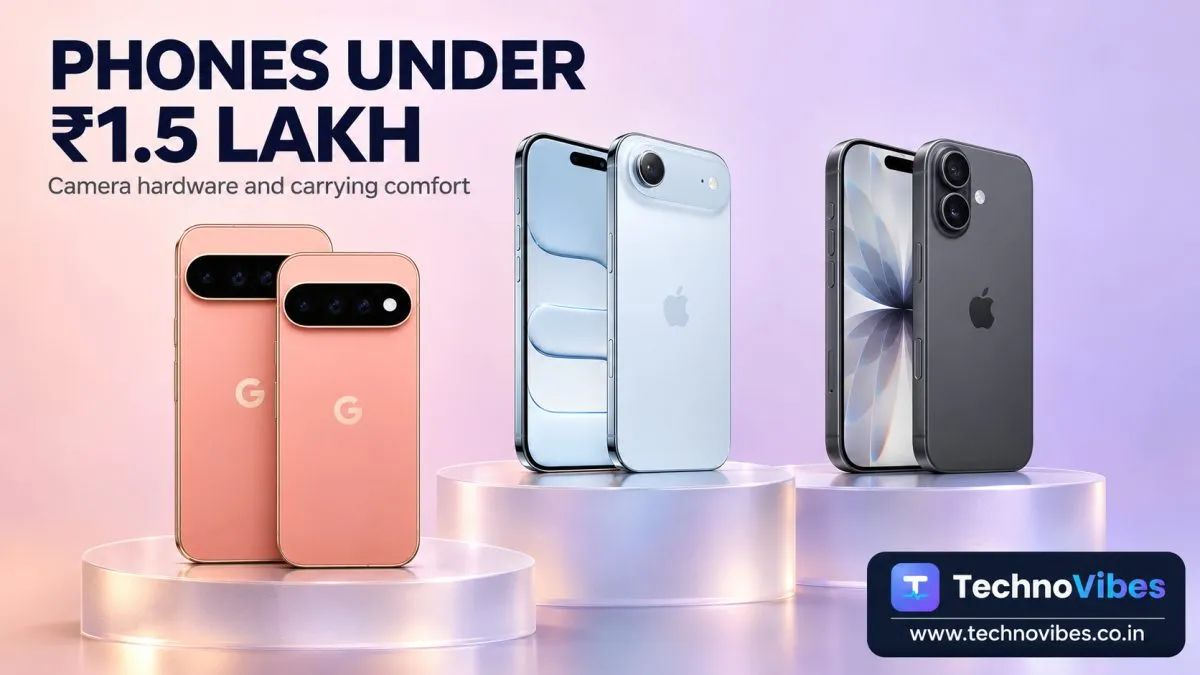
A large budget does not make every expensive phone interchangeable. Pixel 11 Pro is a camera-and-display purchase; iPhone Air is a thinner and lighter iPhone proposition with a simpler rear-camera layout. The less expensive iPhone 17 remains a useful reference for deciding how much of the budget really needs to be spent.
Research date: 25 November 2026. This is a specification-based buying guide. Listed prices are starting references for the Indian market; verify the selected configuration, stock and final amount before ordering.
Budget rule: the shortlist uses the researched starting-price ceiling of ₹1,50,000. A higher-storage version may exceed it. Exchange values and conditional offers should be compared separately from the amount you can pay.
AI-generated editorial composite based on manufacturer phone imagery. TechnoVibes logo and www.technovibes.co.in watermark. Manufacturer rights remain with their respective owners; this is not a hands-on test photograph.
Quick comparison
| Phone | Price reference | Published specification highlights |
|---|---|---|
| Google Pixel 11 Pro | ₹1,19,999 listed starting price | Google Tensor G6; 6.3-inch LTPO OLED, 1–120Hz; 4,850mAh typical battery |
| Apple iPhone Air | ₹1,49,900 listed starting price | A19 Pro chip; 6.5-inch OLED with ProMotion up to 120Hz; 5.64mm listed thickness; 165g weight |
| Apple iPhone 17 | ₹99,900 listed starting price | A19 chip; 6.3-inch OLED with ProMotion up to 120Hz; 48MP main and 48MP ultrawide cameras |
Google Pixel 11 Pro
Pixel 11 Pro is the smaller Pro option to compare when advanced camera hardware matters but a very large phone does not. Its LTPO display and different camera sensors distinguish it from standard Pixel 11. These are specifications that justify a closer look at a matched camera comparison, rather than assuming every Pixel produces identical results.
Apple iPhone Air
iPhone Air is a design-led purchase. Its listed thickness and weight create a different appeal from buying the largest camera module available. Somebody who carries a phone throughout a commute or reads for long periods may value that change. Try it with the case and wallet attachment you expect to use, because accessories alter the very quality you are paying for.
Apple iPhone 17
iPhone 17 is the Apple model to examine when a smoother display and a separate ultrawide matter without the cost of the Pro line. The combination of a 6.3-inch screen and 177g listed weight also makes it worth a hands-on size check. The useful upgrade is the feature you notice daily, such as reading or framing a group photograph.
Try the phone with the case you will use
A diagonal screen size does not tell you how far your thumb must reach. Width, weight, balance and button placement all affect handling. A slim phone can feel different once a protective case or wallet is attached, while a heavier model may feel acceptable when its shape suits your grip.
During a demonstration, read a message, reach the top controls and hold the phone as you would during a long call. Try the keyboard using the hand you normally use. A compact-phone purchase is successful when ordinary actions feel comfortable, not when one measurement is the smallest in a table. Match that experience with sufficient battery and the camera functions you need.
Judge the photographs you actually take
Choose a few recurring subjects before comparing cameras: faces indoors, a child or pet moving, a night street, a document and a group in a small room. A main camera, ultrawide and telephoto solve different framing problems. A crop from a high-resolution main sensor is not the same hardware as a separate optical telephoto lens.
When possible, inspect original files at matched focal lengths and comparable lighting. Optical stabilization can reduce the effect of hand movement, but it does not freeze every moving subject. Megapixel totals and maximum processed zoom are incomplete measures. Keep capture quality separate from an AI-edited result, particularly when the image needs to document something accurately.
Our buying recommendation
Choose Pixel Pro for an identifiable camera or LTPO-display benefit. Choose Air for its particular carrying comfort after checking eSIM requirements and the single-camera trade-off. If neither specialisation describes your routine, compare the standard phone before committing the full ceiling.
Frequently asked questions
Are these prices guaranteed for every variant?
No. The table records researched starting-price references. Storage, colour, seller, stock and eligibility conditions can change the amount due. Confirm the exact version before treating it as within your budget.
Should I spend the full budget?
Only when the additional cost buys a feature or configuration you will use. Include required charging equipment, protection and storage in the same limit instead of comparing handset prices alone.
Check the exact variant before buying
The links below open Amazon search results. Match the model, RAM, storage, seller and warranty; a search result is not an endorsement of every listing. TechnoVibes may earn a commission from qualifying purchases through these links.
- Compare Google Pixel 11 Pro listings on Amazon
- Compare Apple iPhone Air listings on Amazon
- Compare Apple iPhone 17 listings on Amazon
Sources and related reading
Manufacturer specifications and policies checked on 25 November 2026. Product comparisons are editorial analysis of the cited information; no first-hand camera, gaming or battery test is claimed.
- Google official specifications
- Google Pixel 11 Pro
- Google official specifications
- iPhone Air - Technical Specifications
- Buy iPhone
- Get started with the next generation of Apple Intelligence - Apple Support (IN)
- iPhone 17 - Technical Specifications
Related TechnoVibes guides: phones under ₹15,000, phones under ₹20,000, and Snapdragon vs Dimensity.


