

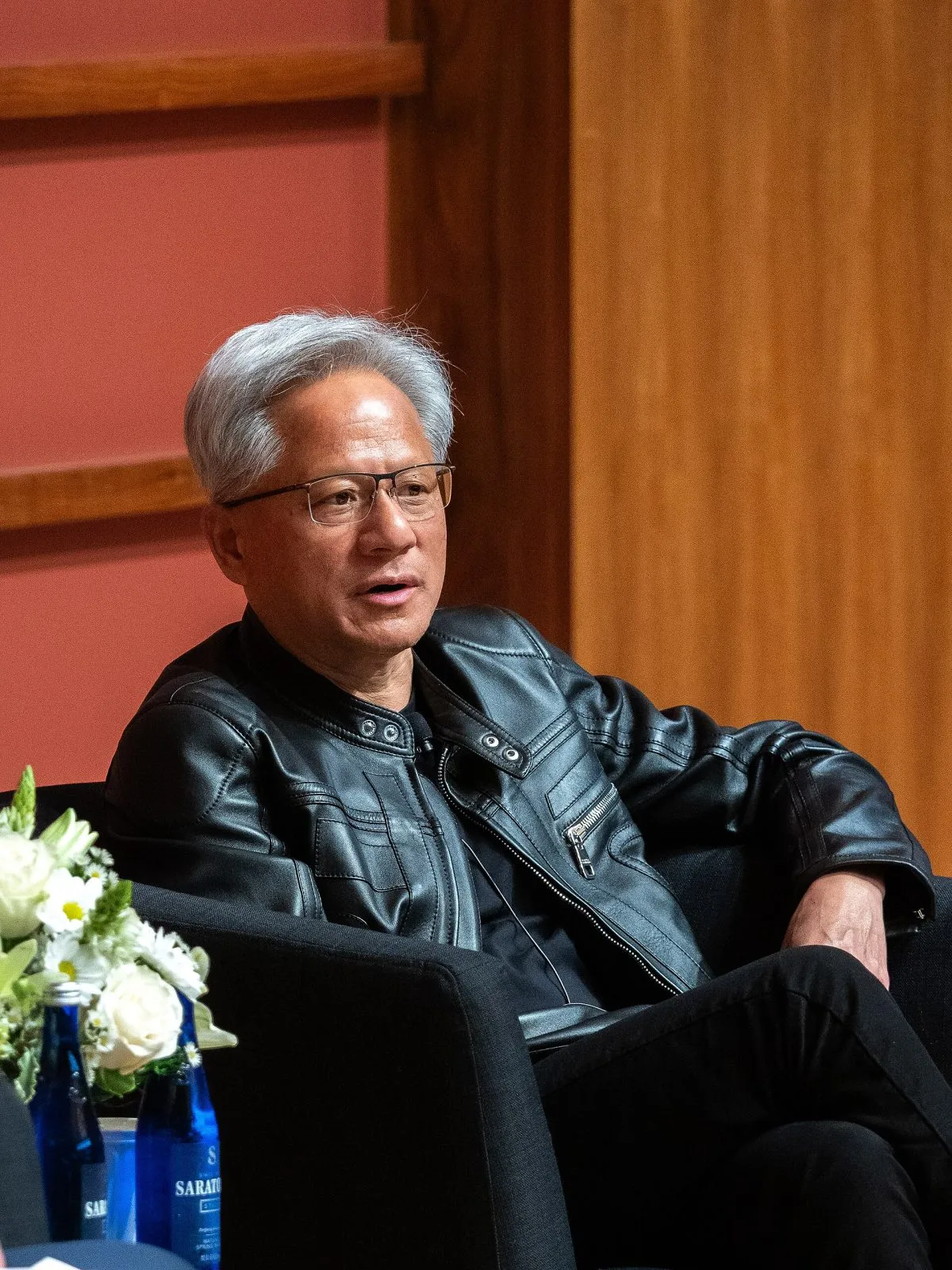
Nvidia's decision to bring back Jensen Huang also leaves an important governance story unfolding. Its 23 November disclosure says an independent investigation will continue, describes a National Security and Export Control Committee and announces a search for a chief compliance officer reporting to the Nominating and Corporate Governance Committee. These measures are set out in the company's Form 8-K and accompanying statement.
For readers following the news on 24 November 2026, those details deserve attention alongside the leadership comeback. An executive appointment and an investigation answer different questions. The first determines who leads the business; the second examines matters within its defined scope. An appointment does not, by itself, provide findings from an unfinished inquiry.
Read the board's assessment with its attribution intact
Nvidia says its board received US government input and is confident that Huang's reinstatement poses no national security risk. That is the board's stated assessment, not a published final finding from every authority or an announcement that all inquiries have ended. The same disclosure says the company will continue cooperating with ongoing government investigations and inquiries.
This distinction is central to accurate reporting. A company can state its position while another process continues. Readers should look for the author, scope and date of any subsequent conclusion before treating it as an answer to a broader question. A short phrase such as “cleared” can imply more than the underlying document establishes.
This article does not make findings about individual misconduct. Its focus is the governance arrangements Nvidia has disclosed and the practical questions those arrangements raise. Any later official findings should be reported on their own terms, including the authority issuing them and the matters they actually resolve.
What a committee can change in practice
A board committee creates a defined place for directors to examine a category of decisions. The practical value depends on its responsibilities, access to information and ability to ask difficult questions. Creating a committee is therefore a structural step. Its effectiveness becomes clearer through the work it performs and how its conclusions feed into decisions.
Nvidia's published Audit Committee Charter provides an example of an existing oversight structure. It covers review of financial reporting, internal controls and risk-management processes, and includes procedures for receiving concerns about accounting or auditing matters. These are pre-existing charter responsibilities, not new findings from the current situation.
Our analysis is that readers should distinguish responsibilities on paper from evidence of implementation. A charter explains who is supposed to review an issue. It does not show what a particular review concluded or establish that a specific control worked in a specific instance. Those questions require additional records or disclosures.
Why the compliance officer's reporting line matters
A reporting line influences how concerns reach decision-makers. If a compliance function identifies a sensitive problem, it needs a route to people able to examine it and support a response. Direct access to an appropriate board committee can be meaningful because some concerns may involve senior commercial priorities or management judgments.
Consider a hypothetical transaction that a sales team wants to complete quickly. A compliance review raises an unresolved question about the destination or intended use. A useful process would specify who can pause the transaction, what evidence is needed, who decides the next step, and how the decision is recorded. This example is illustrative and is not an allegation about an actual Nvidia sale.
The chief compliance officer search is an announced plan. It should not be reported as an appointment already completed. Future disclosures about the person selected, their authority and the resources available to the function would provide more concrete information about how the planned role will operate.
Independence involves both structure and behaviour
Nvidia's Corporate Governance Policies call for a majority of directors to meet the relevant independence standard. They also provide for independent directors to meet without management present and for directors to have access to employees and outside advisers. Those provisions help explain the company's stated framework for board oversight.
In practical terms, oversight benefits from information reaching directors before a decision becomes urgent. A director cannot challenge an assumption they never see. Good reporting should therefore examine whether future company disclosures explain decision processes clearly, while recognising that some sensitive details may remain confidential.
It would be inappropriate to infer the quality of a particular board discussion from a stock chart. Shareholders can welcome a decision for commercial reasons, but their immediate trading response does not disclose what evidence directors reviewed, how they questioned it, or what actions they agreed to take.
How the governance committee fits into the picture
The published Nominating and Corporate Governance Committee Charter assigns responsibilities around board composition, director evaluation and governance processes. It also gives the committee authority to engage independent advisers within its remit. Readers can use the charter to understand the existing body to which the planned compliance officer would report.
Connecting a new position to an established committee can create a clearer escalation path, but it also prompts implementation questions. How frequently will reporting occur? Which concerns require immediate attention? How are disagreements documented? These are questions to follow, rather than undisclosed answers that can be assumed from the announcement.
Another useful question concerns accountability after an issue is identified. A process can generate reports without changing behaviour unless someone is responsible for following up. Measurable actions, deadlines and a clear owner can make that follow-up easier to assess. This is general organisational analysis, not a description of private Nvidia procedures.
What customers should take from the announcement
For a customer, governance can affect confidence in a supplier's ability to make reliable commitments. A business ordering equipment needs to understand delivery terms, support arrangements and the conditions applying to the transaction. Those needs continue regardless of who occupies the CEO office.
The appropriate response is to rely on the actual contract and current supplier communications. A board announcement is relevant background, but it does not rewrite an order confirmation or create a new guarantee. Customers should distinguish commercial commitments addressed to them from broad statements intended for investors and the public.
For employees, similarly, the practical significance of oversight lies in usable procedures: knowing where to raise a concern, how it will be handled and who has authority to respond. A high-profile corporate moment can make those processes more visible, but visibility alone is not evidence of their effectiveness.
The next reporting milestones
Substantive follow-up could include an announced compliance appointment, further explanation of committee responsibilities or findings from the continuing investigation. Each should be assessed for what it actually adds. Silence on a particular topic should not be filled with speculation, and the absence of a published conclusion should not be described as a conclusion in itself.
Huang's return is a major leadership development. The governance story now concerns whether the arrangements described by Nvidia become clear, durable operating practices. Readers can acknowledge the commercial importance of the comeback while continuing to examine oversight through documents, appointments and verified outcomes.
Jensen Huang at Stanford's U.S. Leadership in AI discussion on 9 April 2026. Archival photograph; not his November return. Photo: Anders Eidesvik / Wikimedia Commons. CC BY 4.0. Commons-generated 1920-pixel proportional resize; no local edits, crop or overlays.


